One of private aviation's genuine advantages: a flight can be arranged in hours, not weeks. But "possible" and "optimal" are different things. Here's how the booking window actually affects what you'll pay and what you'll fly.
The sweet spot: 1–3 weeks out
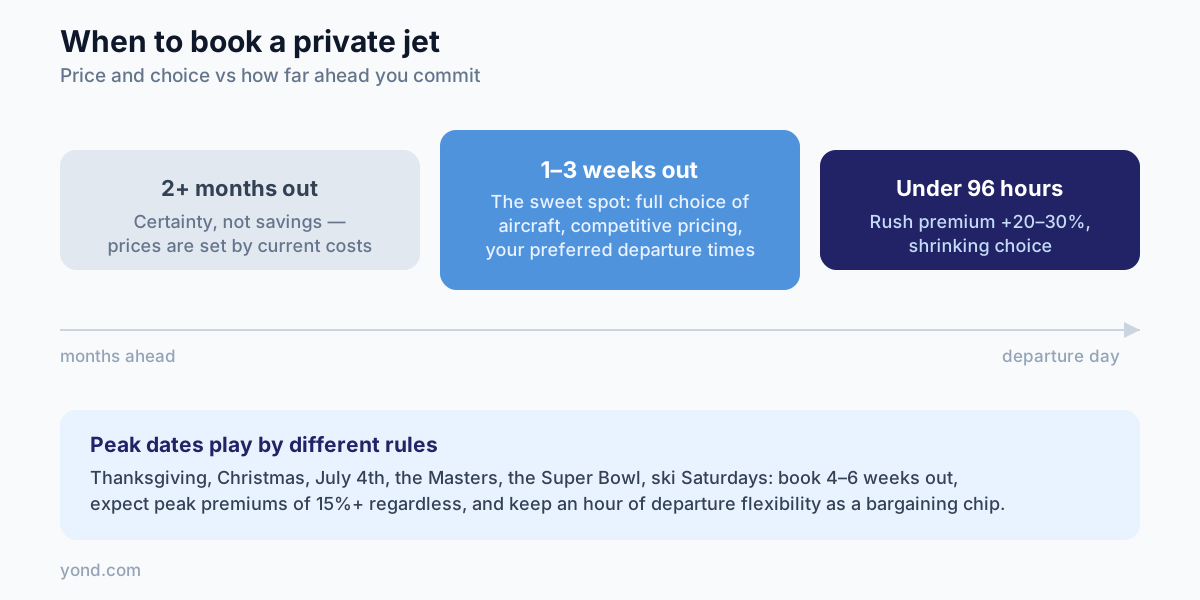
For most trips, booking one to three weeks ahead gets you the full menu: several operators with suitable aircraft, competitive quotes, and your preferred departure times. Aircraft schedules are published but not yet crowded, so operators price to win the trip rather than to ration scarce supply.
Under 96 hours: the rush premium
Inside roughly four days, two things happen at once. Choice shrinks — the aircraft that would have been ideal are committed — and pricing firms up. Operators apply short-notice premiums (typically 20–30%) because a late booking compresses crew scheduling, positioning, and permits into hours. Same-day flights are routine in this industry, but you pay for the privilege and take whatever aircraft is genuinely available.
Peak dates: book like it's an airline
Certain dates behave differently from everything else in the calendar:
- Thanksgiving and Christmas weeks
- July 4th and Labor Day weekends
- The Masters, the Super Bowl, F1 weekends
- Ski-season Saturdays into Aspen and Vail
- Summer Fridays to the Hamptons and Nantucket
On these dates, demand outstrips physical aircraft supply and slot-controlled airports cap arrivals. Book 4–6 weeks ahead, expect peak-day premiums of 15%+ regardless of when you book, and treat departure-time flexibility as a bargaining chip.
Does booking months ahead help?
Less than you'd think. Charter is priced from current costs — fuel, positioning, demand — not from a fare bucket that fills up. Booking three months out mostly buys certainty, not savings; some operators even hesitate to quote firm prices that far ahead. The exception is peak dates, where early truly is cheaper because supply is the constraint.
The practical playbook
Enter your trip in the Yond app as soon as dates firm up — estimates are instant and free across every aircraft class. When you're one to three weeks out, compare cost scenarios across the real aircraft that fit, request firm quotes directly from their certified operators, and keep an hour of departure flexibility in your pocket for peak days. It's the difference between choosing your aircraft and taking what's left.